Welcome to Copperlink International Company!

- Call Us for help!
- +91 9819742205

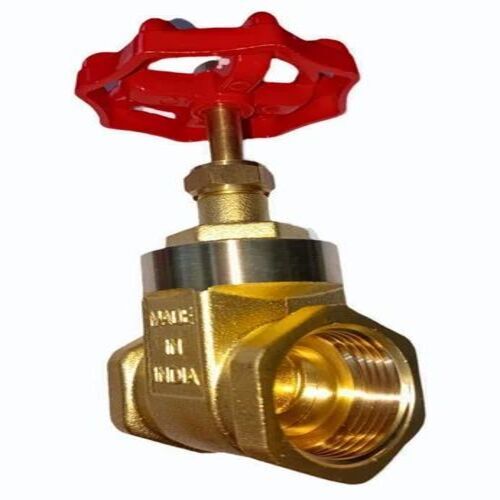
Brass Water Valve
Manufacturer,Stockist and Exporter of Brass Water Valve
Brass water valves are essential components used in residential, commercial, and industrial plumbing networks. They are engineered to regulate, direct, and control the flow of water with high efficiency. Manufactured from strong copper-zinc alloys, brass provides a long service life and reliable sealing. Its natural resistance to corrosion ensures that the valve does not degrade in wet environments. Brass water valves are compatible with varying pipe sizes, from small domestic lines to large pipelines. Their compact structure allows for seamless installation in tight plumbing spaces. Engineers and plumbers trust brass because it maintains mechanical integrity even under stress. The result is a valve solution that delivers safety and performance over many years.
The core advantage of a brass water valve is its impressive durability and resistance to wear. Unlike plastic or lightweight metals, brass does not crack easily under pressure fluctuations. Its material composition prevents internal scaling, preserving flow rate and pipe hygiene. This is especially beneficial in potable water systems where contamination must be minimized. Brass valves also tolerate high temperature ranges, supporting cold and hot-water circuits. While other materials degrade over time, brass maintains smooth functionality. Because of its thermal stability, the valve can be used in HVAC, boilers, and irrigation. These factors collectively make brass an industry-standard solution.
A brass water valve can be found in many configurations, each serving distinct flow control needs. Ball valves provide quick shut-off and excellent sealing performance. Gate valves are ideal for fully open or fully closed conditions, minimizing flow resistance. Globe valves enable controlled regulation when flow precision is required. Check valves allow water to move in one direction, preventing backflow and contamination. Different variants allow engineers to match valve type to system characteristics. The adaptability of brass construction makes it compatible with each of these mechanisms. Thus, brass water valves support a wide spectrum of applications.
The installation process for brass water valves is straightforward and accessible. Threaded, compression, soldered, and push-fit designs simplify integration into existing pipes. Plumbers value brass because fittings hold tight and do not loosen during service. Torque resistance ensures reliable sealing even in continuous pressure cycles. The valve body is typically machined with precision to avoid leakage at joints. Proper installation requires alignment with flow direction indicators and sealing tape use. When installed correctly, brass valves require minimal maintenance. This convenience enhances project time efficiency and reduces operational downtime.
In potable water supply, brass water valves are preferred due to hygiene and stability. Modern lead-free and dezincification-resistant (DZR) brass compositions prevent toxicity risks. These compositions comply with international drinking water standards and certifications. Their chemically passive surfaces do not react with water or minerals commonly present. This characteristic is critical in systems distributing drinking water to households. Long service life ensures fewer replacements and fewer disruptions to the water network. Home builders, plumbers, and municipal contractors rely heavily on these properties. Ultimately, brass water valves promote safe, clean water distribution.
Industrial facilities benefit from brass water valves in high-pressure fluid networks. These applications require components that can withstand mechanical vibration and stress. Brass excels at absorbing shock waves without fatigue-induced cracking or bursting. The material’s metallurgical properties maintain tensile strength across temperature ranges. Manufacturers often add protective coatings to resist chemical exposure in industrial fluids. Valves in factories may endure abrasive materials or intermittent flow cycles. Even under such demanding conditions, brass provides stable operation. This multidimensional resilience is why industries continue to adopt brass valves.
Brass water valves also play a vital role in irrigation and agricultural systems. They manage flow to greenhouses, farmland, and landscaping installations. Exposure to moisture, soil minerals, and UV radiation does not rapidly degrade brass. The valves maintain optimal direction and volume of water movement through networks. Farm operators appreciate reliable opening and closing mechanisms when regulating schedules. Low maintenance significantly reduces cost over long seasonal cycles. The mechanical design resists clogging from sediments commonly found in irrigation. The result is a dependable watering infrastructure supporting agricultural yield.
HVAC systems require valves capable of cycle endurance and temperature regulation. Brass water valves manage transport of hot and chilled water in heating circuits and chillers. The valves maintain tight seals despite expansion and contraction of fluid temperatures. This ensures continuous circulation without causing unexpected leaks. Building managers benefit from reduced energy loss and consistent system efficiency. Brass components perform reliably even with glycol mixtures or additives. Because of this stability, they are widely implemented in climate control engineering. Their use supports thermal comfort and energy cost reduction.
Specification Of Brass Water Valve
| Parameter | Specification Details |
|---|---|
| Material | Lead-Free Brass / DZR Brass / Standard Brass (Cu-Zn Alloy) |
| Valve Types | Ball Valve / Gate Valve / Globe Valve / Check Valve / Angle Valve |
| Size Range | 1/4" — 3" (DN6 — DN80) |
| Pressure Rating | PN10 / PN16 / PN20 (Model Dependent) |
| Temperature Range | -20°C to 120°C (Continuous Service Conditions) |
| End Connections | NPT / BSP Threaded, Compression, Solder, Push-Fit Available |
| Seal Materials | PTFE / EPDM / NBR / Viton (Application Based) |
| Media Compatibility | Potable Water, Hot Water, HVAC Fluids, Irrigation Water |
| Handle Options | Metal Lever, Plastic-Coated Lever, Butterfly Handle, Wheel Handle |
| Surface Finish | Natural Brass / Nickel Plated / Chrome Plated |
| Manufacturing Standard | ISO / EN / ASTM / ASME Standards (Depending on Region) |
| Application Areas | Residential Plumbing, Commercial Buildings, HVAC Systems, Irrigation |
| Certifications | NSF / WRAS / CE / Lead-Free Compliance (Model Specific) |
| Operating Method | Manual / Actuator Compatible (Electric or Pneumatic) |
| Service Life | ≥ 50,000 Cycles (Typical for Ball Valves) |
Design improvements in brass water valves now include advanced sealing technologies. PTFE, EPDM, or Viton seats eliminate micro-leakage and enhance closing precision. These seals maintain elasticity through thousands of operation cycles. Users can expect smoother, more responsive control during adjustments. Advanced stems and handles reduce torque and prevent user fatigue. In commercial plumbing, these ergonomic improvements make system management easier. As technology evolves, manufacturers continue integrating innovative sealing materials. This ensures brass valves remain competitive against new alternatives.
Pressure ratings are an essential specification for brass water valves. Their safe operating pressure is typically indicated as PN10, PN16 or higher. Pressure limitations protect system components and prevent hazardous failures. Engineers match ratings with pipeline pressure to maintain system safety. Brass accommodates fluctuating hydrostatic loads due to its ductile composition. This property prevents rupture when subjected to sudden water hammer. Proper pressure matching also extends valve life and operational reliability. Thus, pressure compatibility is a critical purchasing consideration.
Temperature tolerance further enhances the usability of brass water valves. Most models operate successfully from subzero conditions to above 100°C. This enables them to serve in both chilled water plants and boiler systems. Thermal cycles do not degrade brass structure as quickly as alternative materials. Expansion rates remain predictable, which avoids misalignment or leak generation. Engineers can confidently specify brass valves in thermally dynamic networks. The valves maintain performance even after repeated heating and cooling transitions. This consistency is why brass dominates many climate control applications.
Chemical Properties Of Brass Water Valve
| Element | Symbol | Typical Composition (%) | Role in Brass Alloy |
|---|---|---|---|
| Copper | Cu | 57 – 62% | Provides corrosion resistance, ductility, and overall strength. |
| Zinc | Zn | 35 – 40% | Improves machinability, strengthens alloy, enhances hardness. |
| Lead (Lead-Free Option: <0.25%) | Pb | 0.20 – 3.00% / Lead-Free: <0.25% | Improves machinability and sealing; low lead ensures potable water safety. |
| Tin | Sn | 0.05 – 1.00% | Prevents dezincification and enhances corrosion resistance. |
| Nickel | Ni | 0.10 – 1.50% | Improves toughness, polishability, and corrosion resistance. |
| Iron | Fe | 0.05 – 0.80% | Enhances strength and structural integrity at high pressure. |
| Manganese | Mn | 0.05 – 0.50% | Improves wear resistance and hardness. |
| Aluminum (DZR Brass) | Al | 0.02 – 0.10% | Enhances dezincification resistance for potable water valves. |
Flow capacity is strongly influenced by internal valve geometry. Brass water valves are engineered to maintain laminar flow with minimal turbulence. Ball valves offer the highest unobstructed paths, ideal for full-bore applications. Gate valve designs eliminate obstruction when fully opened, reducing friction loss. Globe valves introduce a controlled pathway for precise pressure adjustments. Check valves use a hinge or spring disc to inhibit reverse movement. By selecting the correct geometry, users can optimize system efficiency. This adaptability creates superior water management strategies.
Brass water valves require limited but essential maintenance. Routine inspections check for seal wear, mineral deposits, or handle stiffness. Cleaning can be performed using mild agents that do not damage brass surfaces. Lubrication of stems or moving parts improves operational smoothness. Users should avoid overly abrasive chemicals that corrode internal components. With minimal attention, brass valves deliver many years of service. The ease of maintenance reduces long-term ownership costs. This makes them financially attractive for infrastructure planners.
Sustainability considerations also favor brass water valves. Brass is fully recyclable without significant loss of quality or mechanical strength. This reduces environmental footprint and promotes circular material economy. Manufacturing waste can be reused, improving industrial efficiency. Extended service life contributes to reduced disposal frequency. Eco-conscious building standards increasingly specify recyclable components. Because of these advantages, brass aligns with modern sustainability goals. It represents a durable, reusable, and responsible engineering material.
Mechanical properties Properties Of Brass Water Valve
| Property | Typical Value | Unit | Remarks |
|---|---|---|---|
| Density | 8.4 – 8.7 | g/cm³ | Depends on exact alloy composition |
| Tensile Strength | 350 – 550 | MPa | Indicates the maximum stress brass can withstand |
| Yield Strength | 200 – 300 | MPa | Stress at which permanent deformation occurs |
| Elongation at Break | 25 – 50 | % | Measures ductility and flexibility before fracture |
| Hardness (Brinell) | 60 – 100 | HB | Resistance to surface indentation and wear |
| Impact Strength | 45 – 60 | J/cm² | Ability to absorb sudden energy without fracture |
| Shear Strength | 250 – 350 | MPa | Resistance to forces acting parallel to surface |
| Fatigue Strength | 150 – 200 | MPa | Stress level the material withstands over repeated cycles |
| Poisson's Ratio | 0.34 – 0.36 | Unitless | Describes lateral strain versus axial strain |
| Modulus of Elasticity | 100 – 110 | GPa | Stiffness of the brass material under stress |