Welcome to Copperlink International Company!

- Call Us for help!
- +91 9819742205

Copper Valve
Manufacturer,Stockist and Exporter of Copper Valve
Copper valves are precision-engineered flow control components designed to regulate, block, or direct liquids and gases in a wide range of industrial and domestic systems. They are made from copper or copper-alloy compositions that provide excellent corrosion resistance and thermal conductivity. Because copper is inherently antimicrobial, it reduces bacterial growth on internal surfaces. These valves typically appear in plumbing lines, heating systems, chemical processes, and HVAC installations. Manufacturers create copper valves in numerous configurations to handle diverse flow requirements. Their construction standards are governed by international specifications to ensure durability and safety.
One of the greatest benefits of copper as a valve material is its ability to resist oxidation and scaling, even when exposed to humid or chemically reactive environments. Its metallurgical stability allows it to maintain structural integrity at low and moderately high temperatures. Unlike many ferrous metals, copper does not rust, which makes it safer for potable water applications. In environments where hygiene is crucial, copper’s natural antimicrobial properties minimize contamination. The material also demonstrates strong machinability, enabling manufacturers to craft complex valve geometries. This ease of fabrication ensures precise sealing surfaces that prevent leaks.
Copper valves come in several major categories: ball valves, gate valves, globe valves, check valves, needle valves, and pressure-reducing valves. Ball valves use a rotating spherical mechanism to provide quick on/off flow control. Gate valves control flow through vertical gate movement, allowing near-full pipe diameter passage when open. Globe valves regulate flow more precisely via a movable disc and seat. Check valves prevent backflow, protecting equipment from reverse pressure shocks. Needle valves enable fine flow adjustments for laboratory or process dosing. Each type has unique design merits tailored to different industrial or residential uses.
Copper ball valves are widely favored for their secure shutoff capability and low operating torque. The ball element is housed within a copper or copper-alloy body, typically sealed with PTFE or elastomeric seats. This design results in minimal flow resistance when the valve is fully open, making them ideal for high-volume fluid transport. They are heavily used in plumbing, compressed air lines, and HVAC coolant circuits. Installation can be threaded, soldered, brazed, or compression-type, depending on pipeline requirements. Their corrosion resistance ensures long service even under fluctuating moisture and temperature conditions.
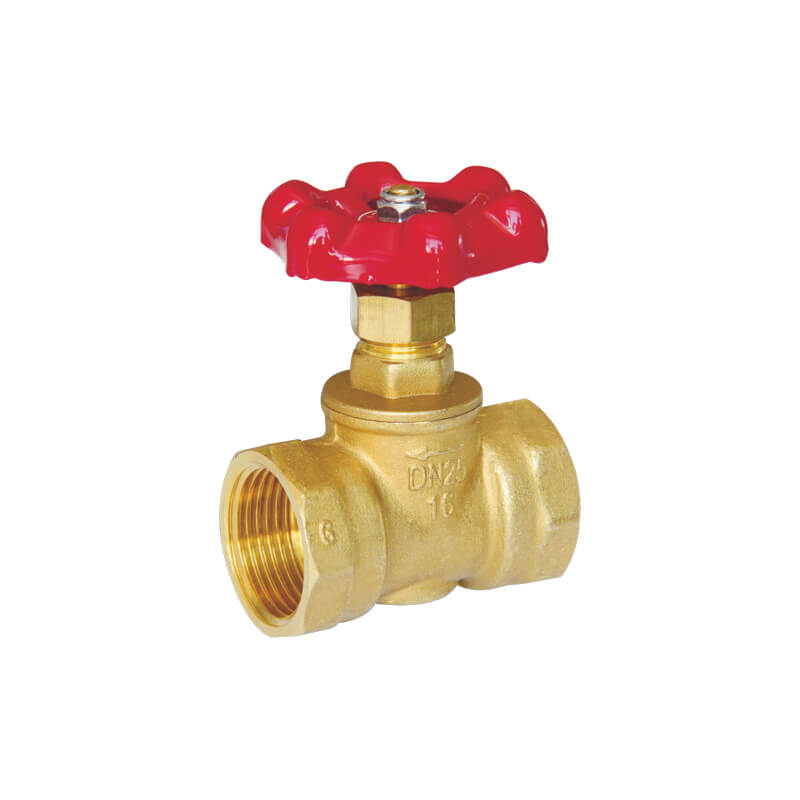
Copper gate valves rely on a wedge or parallel gate mechanism to achieve linear flow control. When fully open, they offer uninterrupted pipeline passage with negligible pressure loss. These are commonly deployed in mainline isolation, firefighting systems, and water distribution pipelines. Their robust mechanical design allows them to handle intermittent operation cycles without rapid wear. However, gate valves are not ideal for throttling because the partially open gate may cause turbulence and erosion. Copper gate valves often feature rising or non-rising stems depending on available installation space. Their simplicity supports easy maintenance and long-term reliability.
Copper globe valves are engineered for more refined flow modulation rather than complete isolation. They use a disc that moves vertically to change the clearance between the seat and plug, which enables accurate flow dosage. Engineers prefer these valves in steam lines, chemical feeds, or sensitive control loops requiring precise regulation. Copper-bodied globe valves are resistant to scale formation, ensuring predictable performance over time. The design typically introduces a pressure drop, which is acceptable in controlled applications. Their serviceability is enhanced by replaceable trim components and resilient seat materials. They are indispensable in laboratory and industrial fluid systems.
Copper check valves ensure unidirectional flow by preventing reverse movement of water or gas. They commonly use swing, lift, or spring-loaded closure designs. These valves are vital in pump discharge lines, preventing backflow that could damage pumps or disturb system equilibrium. Copper alloys withstand condensate exposure, making them useful in air conditioning and refrigeration. Their compact design enables installation in tight spaces where minimal system interruption is required. Copper check valves are often installed with solder or brazed ends for leak-free operation. Their fast response helps protect sensitive downstream components.
Needle valves, when manufactured in copper or copper alloy, deliver unparalleled precision for micro-flow applications. They are frequently used in analytical instruments, gas sampling, laboratory dosing, and low-volume chemical delivery. The fine pitch thread mechanism allows very small rotational movements to regulate flow accurately. Copper’s machinability ensures smooth needle and seat surfaces that minimize leakage and turbulence. These valves can operate in moderate pressure ranges without deformation. Their compact form factor enables integration into confined assemblies. Needle valves help engineers maintain exact control where even slight variations in fluid transfer are unacceptable.
Specification Of Copper Valve
| Specification | Details |
|---|---|
| Material Grade | Pure Copper (C11000), Copper Alloy (C12200, C23000, CuNi Alloys) |
| Valve Types | Ball Valve, Gate Valve, Globe Valve, Check Valve, Needle Valve, Pressure-Reducing Valve |
| Size Range | ¼” to 6” (6 mm to 150 mm) or as per custom requirements |
| End Connection | Threaded (NPT/BSP), Solder, Brazed, Compression, Flanged |
| Pressure Rating | PN10 – PN40 / Class 125 – Class 300 depending on model |
| Temperature Range | -20°C to 200°C (Application dependent & sealing type) |
| Seat Materials | PTFE, EPDM, NBR, Metal Seat |
| Media Compatibility | Water, Steam, Gas, HVAC Refrigerants, Chemical Solutions |
| Standards | ASME, ASTM, DIN, ISO, EN, MSS-SP-80 |
| Surface Finish | Polished, Brushed, Anti-corrosion Coated |
Pressure-reducing valves stabilize downstream pressure, ensuring system safety and optimal performance. These copper models rely on diaphragm or spring mechanisms to modulate inlet pressure and maintain constant output. Such valves are crucial in household water networks, heating systems, and low-pressure distribution pipelines. Copper’s corrosion resistance maintains dependable performance when exposed to mineral-rich or chlorinated fluids. They eliminate pressure spikes that could cause leaks in fixtures or appliances. The self-acting design reduces the need for manual adjustment. They provide operational consistency even when inlet pressure fluctuates significantly.
Copper valves are produced using techniques such as forging, casting, CNC machining, and precision finishing. Forged valves exhibit superior grain structure, making them more durable in fluctuating pressure environments. Casting is useful when complex body shapes or larger sizes are required. CNC machining ensures accurate threads, tight seat tolerances, and optimal sealing surfaces. Manufacturers may perform surface treatments like polishing, chemical cleaning, or deburring to improve longevity and sanitation. Quality control measures include pressure testing, dimensional inspection, and leak detection. The end result is a valve capable of sustained operating performance.
High-quality copper valves rely on robust sealing mechanisms to achieve leak-proof functionality. Sealing seats can be made from PTFE, EPDM, NBR, or metal-to-metal contact based on application demands. PTFE offers excellent chemical resistance and low friction, ideal for potable water and chemical transport. Elastomeric seals provide flexibility under temperature cycling and vibration. Metal-seated variants withstand abrasive media and elevated temperatures. Copper’s inherent softness aids in forming reliable compression seals when coupled with soft metallic trims. Each sealing choice contributes to system lifespan and operational reliability.
Chemical Properties Of Copper Valve
| Element | Symbol | Typical Composition (%) | Notes / Function |
|---|---|---|---|
| Copper | Cu | 94.0 – 99.9 | Base material, corrosion resistance, thermal & electrical conductivity |
| Nickel | Ni | 0.5 – 10.0 | Improves strength, toughness & seawater resistance (Copper–Nickel alloys) |
| Zinc | Zn | 0.5 – 35.0 | Added in brass compositions to improve machinability & mechanical strength |
| Phosphorus | P | 0.01 – 0.35 | Deoxidizer, enhances weldability, improves hardness & wear resistance |
| Lead | Pb | 0.01 – 3.0 | Enhances machinability & sealing performance in some copper alloys |
| Iron | Fe | 0.01 – 1.5 | Improves tensile strength & temperature resistance |
| Other Trace Elements | — | ≤ 0.1 | Small additions for performance optimization depending on alloy grade |
Copper valves can be installed using solder, brazing, compression fittings, or threaded connections. Soldering is common in residential plumbing where temperature and pressure are moderate. Brazing accommodates high-pressure systems, delivering robust leak resistance. Compression fittings allow tool-less installation with ferrules that clamp securely to tubing. Threaded variants—NPT, BSP, or metric—provide flexible integration with mixed-material pipelines. Installers must ensure proper torque application to avoid distortion or galling. Correct installation is critical because improper joining can compromise flow and durability.
Copper valves generally perform best in clean or mildly contaminated media, free from abrasive particles. Extreme temperatures beyond copper’s working limit may require alloy alternatives such as bronze or specialty copper-nickel blends. Regular cycling ensures the moving components don’t seize due to mineral accumulation. When installed in hot water systems, copper’s excellent thermal conductivity distributes heat evenly across the valve body. In corrosive or acidic conditions, compatibility testing is recommended. Proper lubrication of moving parts extends service life. Monitoring pressure drop helps detect early-stage blockage or wear.
Copper valves play critical roles in water supply networks, refrigeration systems, medical gas installations, chemical process pipelines, solar heaters, and heat pumps. Their reliability supports steady state operations without constant human intervention. HVAC systems heavily rely on copper ball and check valves to regulate refrigerant movement. Laboratories utilize needle and globe valves for precise flow dosing of gases and solvents. Commercial buildings incorporate copper valves for potable water, fire safety, and heating circuits. Municipal infrastructure values their ability to withstand environmental exposure. Their versatility makes them integral in countless engineered systems.
Mechanical properties Properties Of Copper Valve
| Mechanical Property | Unit | Typical Range | Remarks |
|---|---|---|---|
| Tensile Strength | MPa | 200 – 350 | Defines ability to resist pulling or stretching forces |
| Yield Strength | MPa | 70 – 150 | Point at which permanent deformation begins |
| Elongation at Break | % | 25 – 45 | Measures ductility and flexibility of material |
| Hardness | HB (Brinell) | 40 – 100 | Higher values increase wear resistance |
| Density | g/cm³ | 8.7 – 8.9 | Mass per unit volume, influences valve weight |
| Melting Point | °C | 1083 | Pure copper; alloy melting points vary slightly |
| Thermal Conductivity | W/m·K | 380 – 400 | Excellent heat transfer capability for HVAC & refrigeration |
| Modulus of Elasticity | GPa | 110 – 130 | Indicates stiffness and deformation resistance |