Welcome to Copperlink International Company!

- Call Us for help!
- +91 9819742205

Copper Industrial Valve
Manufacturer,Stockist and Exporter of Copper Industrial Valve
Copper industrial valves are widely used in plumbing, HVAC, desalination and industrial process pipelines because of their superior corrosion resistance. Copper has natural antibacterial properties and tolerates water, steam, and certain chemicals better than many other materials. These valves ensure stable fluid regulation even under frequent pressure variation. Their internal surfaces remain smooth, minimizing frictional loss and optimizing flow. Copper’s thermal conductivity allows the valves to perform efficiently in temperature-dependent systems. That is why copper valves are popular for chilled water, heating, refrigeration, and compressed air services. Engineers rely on their longevity and consistent mechanical stability.
The manufacturing of copper industrial valves can involve forging, casting, CNC machining, and precision finishing. Forged valves are typically denser and stronger, providing excellent fatigue performance in demanding environments. Cast valves allow more complex configurations, especially for larger diameters and multiport designs. Machined copper bodies achieve exceptional dimensional accuracy, which is essential when sealing tolerances are tight. After fabrication, surface treatment such as polishing and passivation enhances corrosion resistance. Modern valve manufacturers also integrate automated testing processes like hydraulic pressure testing and vacuum leak detection. This ensures each valve meets stringent industrial safety requirements.
Copper industrial valves are popular in chemical processing systems because the metal does not easily react with non-oxidizing acids and neutral aqueous solutions. Copper provides superior material stability in brine systems and desalination plants, where chloride stress cracking is a concern. In marine applications, copper alloys resist biofouling and microbial growth on wetted surfaces, maintaining operational efficiency. Their durability reduces the need for frequent maintenance, lowering lifecycle costs. Copper valves also withstand cavitation damage in areas of turbulent flow, particularly in globe and control valves. These combined advantages make copper a trusted material in harsh industrial environments.
Copper ball valves are compact, low-torque valves designed for rapid shutoff and straightforward operation. Their spherical closure element provides a full-bore flow path, reducing friction losses in critical supply lines. The smooth internal copper surface helps maintain flow velocity and prevents pressure drop across the valve. These valves are frequently used in HVAC units, hydraulic circuits, and building service lines. They are available in two-way, three-way, and high-pressure designs for industrial fluid networks. Many versions support actuation through electric or pneumatic operators. The ease of maintenance and the simplicity of replacement make copper ball valves widely preferred.
Copper gate valves provide linear flow control through a rising or non-rising stem mechanism. Their wedge or parallel gate design is ideal for applications requiring fully open or fully closed operation. These valves minimize turbulence when open, protecting piping from erosion. Because of their robust sealing capability, copper gate valves are suitable for water distribution, gas services, and plant utility pipelines. Copper’s inherent softness ensures tight seating, creating a reliable seal even after repeated use. The valves’ structure accommodates high temperature gradients without deforming. Maintenance technicians appreciate their simple disassembly and part replacement.
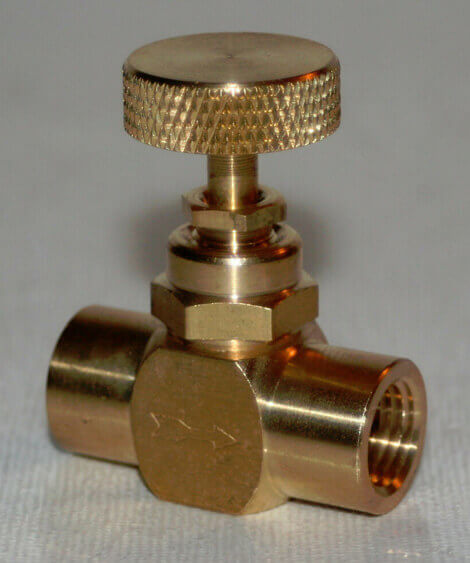
Copper globe valves are essential for systems that require precise throttling and proportional flow regulation. Their internal seat geometry allows gradual fluid modulation, especially in steam, condensate, or industrial cooling lines. Unlike gate valves, globe valves can be safely operated partially open without risking seat damage. Copper construction enhances wear resistance, prolonging internal component life. Many industrial designs include pressure balance features to reduce actuation force. Operators can adjust them manually or via automated actuators using digital control signals. Their dependable performance makes copper globe valves a cornerstone in process control applications.
Copper check valves enable fluid to move through a system in only one direction, preventing undesirable backflow. This protects pumps, compressors, and sensitive equipment from reverse flow damage. Various mechanisms exist: spring-loaded poppet, swing disc, lift check, and silent check designs. Copper bodies provide excellent corrosion immunity, extending service life in water, saline, and air systems. These valves require minimal maintenance due to their self-acting functionality. They are installed in industrial cooling towers, irrigation systems, chemical lines, and HVAC circuits. When correctly sized, copper check valves significantly improve network efficiency.
Copper diaphragm valves use a flexible elastomeric membrane to control flow and maintain leak-free sealing. They excel in applications requiring sterile or contamination-free performance, such as food processing and pharmaceutical production. The copper valve body protects against microbial buildup and withstands frequent sanitation cycles. Because the diaphragm isolates the working components from the media, internal wear is minimized. This design is ideal for aggressive chemicals or viscous fluids that can damage conventional seals. Copper diaphragm valves offer reliable long-term performance with very low contamination risk. Their hygienic benefits are unmatched in cleanroom fluid systems.
Specification Of Copper Industrial Valve
| Parameter | Specification | Remarks / Notes |
|---|---|---|
| Valve Type | Gate, Globe, Ball, Check, Diaphragm | Type selected based on flow control requirement |
| Material Grade | C12200, C23000, Cu-Ni Alloys, Bronze (Cu-Sn) | Alloy chosen by corrosion, pressure & temperature needs |
| Nominal Size Range | ½” to 8” (DN15 to DN200) | Custom diameters available on request |
| Pressure Rating | PN10, PN16, PN25 | Higher ratings available depending on alloy & design |
| Temperature Range | -20°C to +200°C | Depends on seal type and media composition |
| End Connections | Threaded (BSP/NPT), Solder, Compression, Flanged | Matches copper and industrial piping standards |
| Actuation Options | Manual, Electric, Pneumatic | Automation ready for industrial control systems |
| Media Compatibility | Water, Steam, Air, Non-oxidizing Chemicals, Saline | Check chemical compatibility per application |
| Seal Materials | PTFE, NBR, EPDM, Graphite, Metal Seat | Chosen based on temperature & chemical exposure |
| Manufacturing Process | Forged, Cast, CNC Machined | Forged valves recommended for high pressure |
| Surface Finish | Polished / Passivated | Improves corrosion & scale resistance |
| Standards | ASME / DIN / BS / ISO | Compliance varies per model & market |
| Leak Test | Hydrostatic & Pneumatic | 100% pressure tested before dispatch |
| Installation Orientation | Horizontal / Vertical | Depends on valve design and flow direction |
| Lifecycle Expectancy | ≥ 10–15 Years | With proper maintenance and operating conditions |
Industrial copper valves often utilize copper alloys like C12200, C23000, or Cu-Ni blends to enhance mechanical strength. These alloys resist pitting corrosion and handle elevated pressures more effectively than pure copper. The addition of nickel improves durability under marine exposure and saltwater conditions. Bronze compositions—copper with tin—deliver improved tensile strength for high-stress valve bodies. Manufacturers carefully select alloy grades based on operating temperature, fluid composition, and pressure cycles. Proper alloy selection ensures optimum lifecycle stability and reduces accident risk. This material science approach underpins modern industrial valve performance.
Copper valves for HVAC systems are engineered for thermal cycling and refrigerant compatibility. When exposed to fluctuating temperatures, copper’s thermal conductivity helps maintain uniform heat transfer across valve surfaces. This prevents localized thermal stress and deformation. Copper valves also form dependable joints with copper piping, reducing installation risks. In commercial HVAC plants, these valves are used to regulate chilled water, refrigerants like R410a or CO₂, and glycol mixtures. Their corrosion resistance prevents scaling inside coils and heat exchangers. As a result, HVAC systems maintain consistent efficiency throughout long maintenance intervals.
In water treatment and potable supply networks, copper industrial valves are highly valued for hygiene and chemical stability. Copper naturally inhibits bacterial colonization such as Legionella, helping maintain water quality. Valves constructed with lead-free copper alloys comply with modern drinking water safety standards. Their smooth passageways resist lime scale and sediment buildup, maintaining high flow capacity. They operate reliably across wide pressure ranges, which is important in municipal pumping stations. Performance remains stable even after repetitive open-close cycles. Their use in public infrastructure demonstrates industry trust in copper solutions.
Chemical Properties Of Copper Industrial Valve
| Element | Symbol | Typical Composition (%) | Role / Effect in Valve Alloy |
|---|---|---|---|
| Copper | Cu | ≥ 99.9 (Pure Copper) / 85–99 (Copper Alloys) | Base material providing thermal conductivity, corrosion resistance, and ductility |
| Nickel | Ni | 0–30 | Improves strength, seawater resistance, and hardness; essential in Cu-Ni marine valves |
| Zinc | Zn | 0–34 | Enhances mechanical strength and machinability; used in brass valve alloys |
| Tin | Sn | 0–12 | Increases tensile strength and fatigue resistance; core element in bronze valves |
| Lead | Pb | 0–3 (Lead-Free <0.25%) | Improves machinability; low-lead or lead-free grades used for potable water standards |
| Phosphorus | P | 0–0.05 | Deoxidizer, improves wear resistance and enhances alloy casting/forging performance |
| Iron | Fe | 0–2 | Improves structural stability; increases resistance to high-temperature stress |
| Manganese | Mn | 0–2 | Improves corrosion resistance and material toughness in high-stress environments |
| Aluminum | Al | 0–3 | Enhances oxidation resistance and strengthens surface stability |
Industrial designers consider the sealing mechanisms used in copper valves as critical performance elements. Common seal materials include PTFE, elastomers, graphite, or metal-to-metal contact. PTFE provides broad chemical resistance and low friction, ideal for high-cycle ball valves. Elastomer seals deliver flexible leak protection in moderate-temperature pumping systems. In high-temperature or abrasive applications, metal seats enable extended service with minimal wear. Copper valve seats form tight compression under load, preventing leakage across the interface. The correct seal pairing with copper ensures consistent operational reliability. Engineers carefully match seals to media and duty cycles.
Maintenance practices for copper industrial valves are relatively minimal compared with other metals. Routine checks include tightening gland nuts, confirming seat integrity, and cleaning mineral buildup. Because copper resists rusting, lubrication demands remain low. Operators should inspect actuator alignment to prevent stem bending or seat wear. In chemical plants, corrosion mapping helps identify potential hotspots. Scheduled testing of pressure boundaries ensures compliance with safety codes. With proper preventive measures, copper valves can serve continuously for many years without costly replacement cycles.
Environmental sustainability makes copper valves increasingly attractive. Copper is fully recyclable and retains material quality after reprocessing. Unlike polymers or composites, copper can be melted, purified, and repurposed without structural compromise. Industrial recycling reduces raw material waste and lowers carbon footprint. Many manufacturers now design valves with modular parts to simplify recovery and recycling. Copper’s recyclability supports global circular economy initiatives. End-of-life copper valves are valuable materials, incentivizing responsible disposal. Sustainable engineering continues to push copper to the forefront of industrial valve solutions.
Mechanical properties Properties Of Copper Industrial Valve
| Property | Typical Value | Unit | Notes / Application Impact |
|---|---|---|---|
| Tensile Strength | 200–450 | MPa | Higher values in Cu-Ni and bronze alloys; forged valves perform best under stress |
| Yield Strength | 70–250 | MPa | Influences resistance to deformation and pressure load cycles |
| Elongation at Break | 10–45 | % | Indicates ductility and ability to withstand bending or expansion |
| Hardness | 50–150 | HB | Harder alloys (bronze, Cu-Ni) resist abrasion and seat wear |
| Density | 8.7–8.95 | g/cm³ | High mass stability helps resist vibration and impact forces |
| Modulus of Elasticity | 100–130 | GPa | Determines stiffness and structural stability during valve actuation |
| Thermal Conductivity | 200–390 | W/m·K | Superior heat transfer makes copper ideal for HVAC and cooling systems |
| Melting Point | 1083 | °C | Allows operation in high-temperature fluid environments |
| Coefficient of Thermal Expansion | 16–17 | µm/m·°C | Low expansion reduces stress and leakage across temperature changes |