Welcome to Brasslink International Company!

- Call Us for help!
- +91 9819742205
- Mail Us
- Brasslinkinternational@gmail.com

Forged Brass Valve
Manufacturer,Stockist and Exporter of Forged Brass Valve
Forged brass valves are precision-engineered devices designed to regulate, control, or shut off fluid flow in pipelines and industrial systems. Unlike cast brass valves, forged brass undergoes intense compression that increases material density and structural integrity. This superior mechanical strength results in better resistance to cracks, porosity, and deformation under extreme pressure. Industries value forged brass for its compact grain structure, which delivers leak-proof sealing even in challenging environments. It combines the traditional corrosion resistance of brass with enhanced durability, making it ideal for plumbing and mechanical applications. Forged brass valves also maintain performance stability across fluctuating temperatures and fluid types. Their operational lifespan often surpasses other brass-based valve categories, reducing maintenance costs and failures.
The forging process begins with heating brass billets to controlled temperatures, allowing them to be pressed into shape without melting. This compressive forming method alters the internal structure, resulting in improved tensile and yield strength. Because forging avoids casting defects like voids, air bubbles, or coarse grain, the final valve body becomes highly reliable. Precision machining is then applied to create threaded ends, sealing seats, and flow channels. Manufacturers often use multi-axis CNC equipment to ensure dimensional accuracy and tight tolerances. These machining steps are crucial to maintaining smooth valve operation and tight sealing performance. Heat treatment is sometimes applied to further enhance material consistency and wear resistance.
A forged brass valve is commonly used in residential plumbing systems due to its ability to withstand water pressure variations. It is ideal for hot and cold water distribution lines, providing excellent sealing against leaks. In heating systems, forged brass valves endure thermal cycling without deformation, making them suitable for radiator control. Additionally, their corrosion resistance allows long-term use in water with varying mineral content. Household users benefit from low maintenance requirements, reducing the need for frequent replacements. Installation is simple due to user-friendly connection types such as BSP, NPT, compression, or soldering. These valves also integrate well with copper and brass fittings commonly found in domestic piping networks.
Industrial sectors utilize forged brass valves for oil, gas, compressed air, and chemical applications. The material’s structural integrity allows the valves to hold pressure ratings far above those of sheet-metal or cast alternatives. They are preferred in environments where rapid opening and closing cycles occur regularly. High machining precision ensures smooth operation even under heavy-duty duty cycles. Industrial users favor forged brass valves because they retain sealing properties even after prolonged mechanical stress. Many models feature enhanced ball or disc geometry to reduce wear and improve flow dynamics. Their compatibility with standard piping sizes makes integration across pipelines simple and cost-effective.
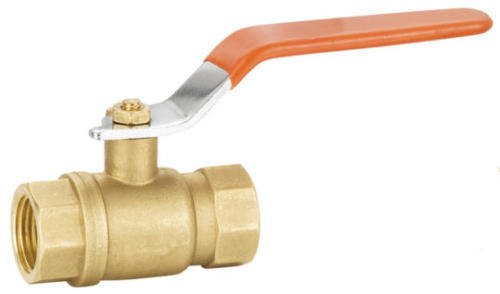
Forged brass valves appear in several variants, each serving a unique function. Ball valves provide straightforward on/off functionality and quick shutoff using a rotating spherical plug. Gate valves feature a rising or non-rising stem that raises a gate barrier for unrestricted flow. Check valves permit fluid flow in a single direction, preventing backflow damage to pumps and pipelines. Globe valves use a seating mechanism that regulates flow with precise throttling capabilities. Each type offers engineering benefits depending on pressure demand, flow control needs, and installation constraints. The diversity of forged brass valve designs enhances adaptability across industries.
One of the defining attributes of forged brass valves is their exceptional corrosion resistance. Brass, an alloy of copper and zinc, naturally resists rust and environmental degradation. When exposed to water or mild chemicals, brass forms a protective oxide layer that inhibits further corrosion. Forging strengthens this characteristic by eliminating weak areas where corrosion typically begins. This makes forged brass ideal for long-term outdoor or moisture-exposed installations. Sectors like irrigation, HVAC, and low-pressure chemical lines benefit greatly from this resilience. This resistance translates into longer service intervals and fewer operational disruptions.
Pressure performance is another strong advantage of forged brass valves. Their dense grain structure allows pressure ratings that often exceed equivalent cast-brass components. This makes them suitable for high-pressure gas lines, hydraulic equipment, and industrial manifolds. Design enhancements like thicker walls, reinforced stems, and premium sealing seats extend their endurance. Manufacturers test these valves under hydrostatic and pneumatic pressure cycles to ensure reliability. Tests also validate failure resistance under impact, thermal expansion, and rapid flow transitions. The result is a dependable valve capable of handling operational stresses safely.
Temperature tolerance is vital in installations where thermal conditions fluctuate significantly. Forged brass valves can withstand sustained exposure to high and low temperature cycles without cracking. Their uniform structure ensures stable mechanical properties even under thermal shock. This is why they are installed in boilers, heating units, chillers, and industrial coolant lines. Brass’s conductivity enables uniform heat distribution, reducing risk of localized stress failures. Sealing materials such as PTFE or EPDM complement the metal body for optimal performance. This combination ensures operational safety across broad temperature ranges.
Specification Of Forged Brass Valve
| Specification Parameter | Details |
|---|---|
| Material Grade | Forged Brass (CW617N / C37700 / CZ122) |
| Manufacturing Process | Hot Forging + CNC Machined |
| Valve Types | Ball, Gate, Globe, Check, Angle, Stop |
| Connection Standard | BSP, NPT, Compression, Solder, Push-fit |
| Size Range | 1/4" to 2" (6mm to 50mm) |
| Pressure Rating | PN16 to PN40 / 150 PSI to 600 PSI (Model Dependent) |
| Temperature Range | -20°C to 120°C (Seal-dependent) |
| Seal Materials | PTFE, EPDM, NBR, FKM |
| Surface Finish | Natural Brass, Nickel Plated, Chrome Plated |
| Working Medium | Water, Steam, Air, Oil, Gas, Chemical Fluids |
| Standards Compliance | ISO / EN / CE / NSF / RoHS (As Applicable) |
| Handle Material | Aluminum / Stainless Steel / Plastic-Coated Steel |
| Body Design | 2-Piece / 3-Piece / Full Port / Standard Port |
| Installation Method | Threaded, Soldered, Compression, Push-fit |
| Service Life | Over 50,000 Cycles (Depending on Type and Application) |
Mechanical longevity is a core reason engineers select forged brass. It withstands wear from continuous opening and closing movements over prolonged cycles. The reinforced surface and robust stem design reduce fatigue at friction points. High tensile resistance prevents bending or permanent deflection under torque stress. Even valves exposed to heavy vibration maintain functionality over time. This makes them reliable components in factory automation and energy distribution systems. Users benefit from lower repair costs and minimal downtime.
The aesthetic appeal of forged brass valves also plays a role in commercial applications. Their polished or satin finish conveys quality, elegance, and professional craftsmanship. Modern installations, especially those visible in kitchens or architectural projects, benefit from their attractive appearance. Manufacturers sometimes apply nickel plating or chrome coating for enhanced exterior durability. This coating resists scratching, tarnishing, and exposure to cleaning chemicals. The combination of visual appeal and physical strength makes forged brass suitable for high-end installations. Its presence elevates hardware presentation in visible industrial or residential environments.
Environmental sustainability is another reason forged brass valves are favored. Brass is recyclable, and manufacturers often use recycled material in billet production. Forging reduces waste because excess material can be repurposed and reused. The long service life of these valves minimizes replacement frequency, reducing material consumption overall. Lead-free brass options help comply with potable water standards such as NSF/ANSI 61 or ROHS. Industries prioritizing green policies choose forged brass to meet compliance and sustainability standards. This makes them an eco-positive alternative to disposable or weaker valve categories.
Chemical Properties Of Forged Brass Valve
| Chemical Element | Symbol | Percentage (%) | Remarks |
|---|---|---|---|
| Copper | Cu | 57 – 60% | Primary base metal; provides corrosion resistance and toughness. |
| Zinc | Zn | 38 – 41% | Improves strength, machinability, and hardness. |
| Lead | Pb | 0.1 – 2.5% | Enhances machinability; low or zero in lead-free grades. |
| Iron | Fe | ≤ 0.5% | Trace element; adds structural reinforcement. |
| Manganese | Mn | ≤ 0.3% | Improves hardness and wear resistance. |
| Nickel | Ni | ≤ 0.5% | Enhances corrosion performance and thermal stability. |
| Tin | Sn | ≤ 0.3% | Improves resistance to dezincification. |
| Other Elements | - | ≤ 0.2% | Trace impurities; controlled for quality and compliance. |
Installation and maintenance of forged brass valves are generally straightforward. They feature user-friendly thread patterns that integrate with standard pipeline components. Professionals benefit from quick sealing, minimal leakage incidents, and smooth movement upon activation. Periodic maintenance involves inspecting seals and lubricating internal components if necessary. Their pressure-resistant structure ensures valve bodies seldom require replacement. Operators focus more on gasket or seat replacement than structural repairs. This simplicity lowers operational expenses for both residential and industrial users.
Forged brass valves also offer strong compatibility with a variety of sealing materials. PTFE seats ensure low-friction motion and prevent chemical attack from aggressive fluids. EPDM seals withstand hot water and steam, making them ideal for HVAC systems. NBR (nitrile rubber) provides excellent resistance to petroleum-based fluids and gas. This adaptability enables engineers to tailor the valve to specific environmental conditions. Sealing material selection often dictates functional lifespan and leakage resistance. Therefore, proper engineering choice ensures optimal long-term performance.
Accessories and upgrades enhance forged brass valve performance. Extended handles, lockable stems, and insulated covers support specialized functions. Industrial users may install auxiliary flow gauges or temperature indicators directly to the valve body. Smart monitoring systems can track fluid movement through integrated sensors. These technologies provide data essential for predictive maintenance and operational optimization. Engineers benefit from clearer insights into system health and performance. As a result, forged brass valves adapt well to modern automation systems.
Mechanical properties Properties Of Forged Brass Valve
| Mechanical Property | Unit | Typical Value (Forged Brass CW617N / C37700) | Description |
|---|---|---|---|
| Tensile Strength | MPa | 350 – 500 MPa | Resistance of the material to breaking under tension. |
| Yield Strength | MPa | 150 – 250 MPa | Stress at which permanent deformation begins. |
| Elongation at Break | % | 10 – 25% | Material’s ability to stretch before fracture. |
| Hardness | HB (Brinell) | 80 – 120 HB | Resistance to indentation and wear. |
| Density | g/cm³ | 8.4 – 8.6 | Mass per unit volume; reflects material compactness. |
| Impact Resistance | Charpy | High | Ability to withstand sudden shocks and loads. |
| Melting Point | °C | 880 – 920°C | Temperature range at which brass transitions to liquid. |
| Thermal Conductivity | W/m·K | 95 – 120 | Capacity to conduct heat efficiently. |
| Fatigue Resistance | - | Excellent | Durability under repetitive opening/closing cycles. |