Welcome to Brasslink International Company!

- Call Us for help!
- +91 9819742205
- Mail Us
- Brasslinkinternational@gmail.com

High Pressure Brass Valve
Manufacturer,Stockist and Exporter of High Pressure Brass Valve
High pressure brass valves are engineered to withstand extreme operational loads in industrial and commercial piping systems. Their robust forged brass construction allows them to maintain pressure ratings far beyond standard plumbing valves. When installed in high-demand conditions, they provide precise control and reliable shutoff to protect downstream equipment. Their body structure resists deformation, even under continuous cycles of pressure. These valves are commonly used in hydraulic lines, compressed air networks, and fluid media containing oils or fuel. The high tensile strength of brass ensures longevity and minimal performance degradation. This durability reduces replacement frequency and prevents downtime.
A major advantage of high pressure brass valves lies in their corrosion resistance. Brass naturally resists rust, mineral scale, and degradation caused by harsh liquids. This makes it suitable for marine environments, chemical plants, and process applications where fluid purity matters. Its surface remains stable even during long exposure to humid climates, saline fluids, or combustible gases. This keeps sealing elements intact, ensuring no pressure leak. Brass also avoids embrittlement issues that affect carbon steel in certain media. Long-term corrosion stability protects internal components, lowering maintenance costs.
High pressure brass valves typically feature advanced sealing options such as PTFE, PEEK, or reinforced elastomer seats. These seatings withstand strong compressive forces and temperature variations, maintaining a leak-tight closure. They also help minimize friction, enabling smooth valve movement. When pressure rises rapidly, the seat compensates to prevent micro gaps. This sealing integrity is especially critical in installations with frequent start/stop cycles. A properly selected seat material ensures low-torque operation and longer service intervals. Users benefit from consistently stable performance across a wide range of media.
Industrial systems require valves that perform accurately in both static and dynamic pressures. High pressure brass valves excel due to their resistance to fatigue caused by continuous cycling. They can repeatedly open and close without losing structural integrity. Internal design elements help evenly distribute load, preventing crack development. Their pressure ratings often fall in mid-high ranges suitable for pumps, compressors, manifolds, and automation lines. When combined with heavy-duty actuators, they maintain responsiveness during pressure fluctuations. This adaptability makes them a core asset in industrial infrastructure.
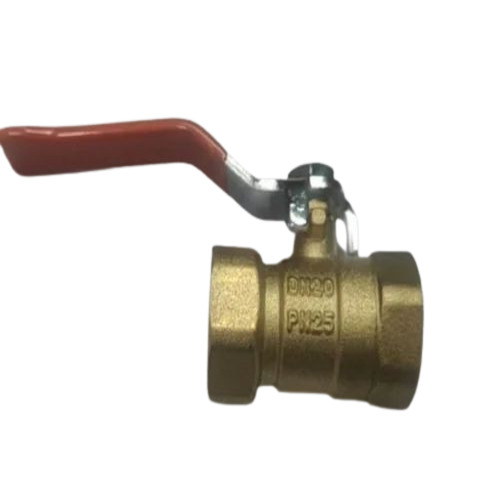
Versatility is another defining characteristic of high pressure brass valves. They are available in ball, gate, globe, needle, and check valve configurations. Each variant supports different types of fluid regulation — from abrupt shutoff to gradual throttling. Ball valves excel in quick isolation, while needle valves help meter flow precisely. Gate valves provide full bore passage with minimal flow resistance. Check valves prevent unwanted backflow that could damage equipment. This multi-model availability allows engineers to match the correct valve to application demands and system architecture.
High pressure brass valves are often chosen for compressed air, refrigerants, high-viscosity fluids, and hydraulic oils. Their structural stiffness prevents housing deformation as pressure pulses move across the fluid line. Brass does not spark, making it suitable for fuel systems and gas lines where ignition risks exist. It also prevents contaminant shedding, preserving fluid clarity. Applications in factories, automotive service centers, refineries, and shipyards benefit from their reliability. They are also widely used in agricultural irrigation systems where pumps produce high discharge pressure. In every environment, they deliver stable performance.
Threaded connection standards like NPT, BSP, and ISO threads are common in high pressure brass valves. These connections allow secure attachment, reducing the possibility of leaks in high PSI environments. Threaded ends are popular in compact or modular assemblies, where maintenance requires quick disassembly. In larger industrial installations, flanged brass valves provide improved surface sealing and torque resistance. Compression or push-fit fittings are sometimes available for smaller diameters. Proper installation practices help preserve pressure rating and sealing performance. Choosing the correct connection type is critical for safety and longevity.
Temperature tolerance is as essential as pressure rating. High pressure brass valves are designed to handle both heat and cold depending on model specification. Brass maintains structural integrity across wide temperature intervals without becoming brittle. Combined with engineered seats, they withstand hot water, steam, refrigeration fluids, and chemical solutions. This makes them reliable in process plants, HVAC systems, and steam distribution lines. Extreme temperature resistance also ensures performance during seasonal climate variations. When selected properly, they maintain consistent flow control without seal degradation.
Specification Of High Pressure Brass Valve
| Parameter | Specification / Typical Values |
|---|---|
| Model | HPBV-100 / HPBV-200 / HPBV-300 (example model series) |
| Body Material | Forged Brass (Lead-free, e.g., CW602N / ASTM B283 or equivalent) |
| Trim (Internal Parts) | Brass stem, stainless steel ball/seat carrier (model dependent) |
| Seat Material | PTFE (standard); options: PEEK, Buna-N, EPDM |
| Stem Material | Stainless Steel (SS304 / SS316) or Brass with anti-corrosion plating |
| Pressure Rating (Max Working) | PN25 / PN40 (Up to 25–40 bar; model dependent). Hydrostatic test to 1.5× or 2× working pressure. |
| Burst Pressure | Typically > 3 × rated working pressure (verify per model datasheet) |
| Temperature Range | -20°C to +120°C (PTFE seats); extended ranges available with special materials |
| End Connections | Threaded: NPT / BSP; Flanged: ANSI / DIN; Compression / SAE options available |
| Sizes (Nominal) | ¼" to 2" (DN8 to DN50) typical; custom sizes on request |
| Flow Coefficient (Cv) | Model dependent — examples: 0.8 (¼") → 40 (2") — see datasheet for exact Cv values |
| Endurance / Cycle Life | Minimum 30,000 cycles (depends on actuator and service conditions) |
| Surface Finish | Machined bright; optional nickel or chrome plating; passivated where required |
| Leakage Class | API 598 / ISO 5208 applicable; typical class: Bubble-tight / Class VI (soft seat) |
| Standards & Certifications | ISO 9001 manufacturing; optional: WRAS / NSF61 / ACS / DVGW / EN/ASME standards (model dependent) |
| Testing | Hydrostatic test, shell & seat test, torque test, visual & dimensional inspection |
| Actuation | Manual (lever / gear), Electric actuator, Pneumatic actuator (ISO 5211 mounting) |
| Typical Applications | Hydraulic lines, compressed air systems, fuel and oil systems, steam (low-medium), industrial process lines |
| Weight | Varies by size and model — approx. 0.2 kg (¼") to 3.5 kg (2") |
| Packaging | Individually boxed with protective caps; export crating available |
| Warranty | Standard 12 months from shipment; extended warranty options upon agreement |
| Notes | All values are typical examples. Confirm exact ratings, materials, and certifications with the manufacturer’s datasheet before specifying for critical systems. |
Manufacturers apply strict strength testing to ensure each valve meets its rated design pressure. Quality control includes hydrostatic testing, burst pressure measurement, and cyclic endurance verification. These protocols guarantee that valve bodies and internal parts perform as expected in real-world applications. Brass components undergo machining precision to maintain surface smoothness and tolerance consistency. Complete assemblies are cleaned to remove manufacturing contaminants. High pressure valves often come with traceability codes to maintain safety compliance. This testing ensures user confidence in mission-critical installations.
In harsh working conditions, fluid compatibility can be the deciding factor for valve selection. Brass offers a balanced chemical resistance profile suited for oils, petroleum fuels, non-acidic gases, coolants, and many water-based liquids. Unlike pure copper, brass resists dezincification when properly alloyed. This prevents internal surface erosion that could weaken the valve. Engineers often specify DZR (de-zincification resistant) brass for longer lifespan. Chemical compatibility charts are referenced to confirm safe operation. When matched correctly, brass delivers predictable, stable service.
Maintenance practices extend the operational life of high pressure brass valves. Routine inspection of seals, stems, and rotating mechanisms ensures they continue functioning smoothly. Lubrication of moving parts helps reduce torque and prevents micro abrasions. Cleaning can prevent sediment accumulation that might affect pressure distribution. In heavy fluid systems, filter installations before the valve minimize particulate damage. These practices reduce wear and keep internal geometry intact. Good maintenance lowers ownership costs and preserves factory performance.
Chemical Properties Of High Pressure Brass Valve
| Element | Typical Composition (%) | Notes / Function |
|---|---|---|
| Copper (Cu) | 57–63% | Primary metal; provides strength, corrosion resistance, and ductility |
| Zinc (Zn) | 37–41% | Enhances hardness, strength, and machinability of the alloy |
| Lead (Pb) | ≤0.05% | Lead-free for safety; improves machinability minimally |
| Iron (Fe) | ≤0.3% | Impurity limit; helps improve casting and mechanical stability |
| Manganese (Mn) | ≤0.5% | Increases corrosion resistance and overall strength |
| Nickel (Ni) | ≤0.5% | Optional; improves corrosion resistance, particularly against dezincification |
| Aluminum (Al) | ≤0.2% | Improves mechanical properties and corrosion resistance |
| Tin (Sn) | ≤0.2% | Increases corrosion resistance, especially in seawater and acidic media |
| Other Impurities | ≤0.5% | Minimal; ensures alloy consistency and quality |
High pressure brass valves are favored in automotive and manufacturing automation. Pressurized pneumatic circuits require exact timing and flow regulation to avoid actuator lag or overload. Brass valves deliver repeatable response in these environments, even at high cycle rates. Their body structure resists vibration and mechanical shock from robotic motions. They also support compact pneumatic modules due to their high strength-to-weight ratio. In assembly lines, they minimize downtime caused by valve failures. Their reliability translates into sustained productivity.
In the energy and utility sector, brass valves are deployed for gas distribution and pump discharge networks. These systems demand components that endure constant demand without corrosion damage. Brass’s conductivity also allows controlled dissipation of static buildup, reducing spark risks. Utility companies rely on dependable flow control to maintain service continuity. High pressure brass valves fulfill these tasks with predictable performance. Their ease of installation reduces maintenance windows. This reliability supports infrastructure stability for thousands of users.
Marine applications often expose valves to saltwater, temperature swings, and vibration from engines. Brass resists salt corrosion more effectively than carbon steel and many lower-grade alloys. Onboard systems such as bilge pumps, cooling loops, and fuel manifolds depend on durable valves. Brass valves also avoid magnetic interference issues, making them suitable for sensitive navigation areas. Their mechanical toughness withstands shipboard movement and continuous operation. Selecting corrosion-resistant brass ensures extended service despite harsh maritime environments. This makes them a staple in shipbuilding.
Mechanical properties Properties Of High Pressure Brass Valve
| Property | Typical Value | Notes / Description |
|---|---|---|
| Tensile Strength (σb) | 350–450 MPa | Maximum stress before fracture; ensures valve body withstands high pressure |
| Yield Strength (σ0.2) | 200–250 MPa | Stress at which permanent deformation begins; indicates load-bearing capacity |
| Elongation at Break | 10–15% | Measures ductility; indicates ability to deform without cracking |
| Hardness (Brinell, HB) | 90–120 HB | Indicates resistance to surface wear and indentation |
| Impact Strength (Charpy) | 35–50 J/cm² | Resistance to sudden shocks or mechanical impact |
| Fatigue Strength | 120–150 MPa | Endurance under cyclic loading; important for repetitive valve operation |
| Shear Strength | 250–300 MPa | Resistance to sliding failure between layers; critical for stem and body interface |
| Compression Strength | 400–500 MPa | Resistance to crushing under axial load; ensures valve stability under high PSI |
| Operating Pressure | Up to 40 bar (PN25–PN40) | Safe working pressure range for industrial applications |
| Temperature Range | -20°C to +120°C | Service temperature limits based on material and seat type |
| Corrosion Resistance | Excellent | Resists rust, dezincification, and chemical attack in normal service media |
| Leakage Class | Class VI (soft seat, bubble-tight) | Ensures minimal or zero leakage under rated pressure |
| Cycle Life | ≥30,000 operations | Minimum number of opening/closing cycles under standard operating conditions |
| Surface Finish | Machined / Polished | Ensures smooth internal flow and proper sealing with seats |
| Weight | 0.2 kg (¼") – 3.5 kg (2") | Depends on size and configuration; affects installation and handling |